- Home
- /
- School Rowing
- /
- A woman of...
A woman of unwavering belief
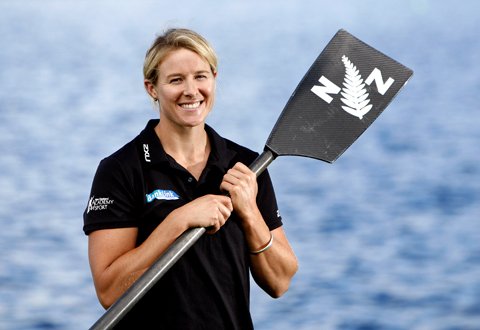
Rower Fiona Paterson ranks as one of New Zealand’s most courageous athletes. She talks to Andy Hay about her new challenge in the sport.
Fiona Paterson has had to say no to a lot of things over the past few years.
The after-effects of a once life-threatening cancer can limit your ability to say yes, to take up opportunities, to stretch yourself too thin.
But this month, the former World Championship medalist and 2012 Olympic double sculler was back in a high-performance role with the sport she’s been dedicated to since she was a student at Columba College in Dunedin.

Fiona (B) and Anna Reymer (S) compete in the women's double sculls at the London 2012 Olympic Games.
“I've got lymphoedema, which is a bit of a hangover from cancer treatment and having lymph nodes removed,” says Fiona from the classroom where she tutors Year 8s at Rangi Ruru Girls’ School in Christchurch.
It’s a condition that can cause severe swelling in the limbs. It’s something she’s lived with since being diagnosed with and treated for a rare form of cervical cancer nearly 20 years ago.
But in 2018, the lymphoedema in her leg worsened significantly.
“I got an infection which damaged the lymph system further and made the leg very large and more prone to re-infection – which is a vicious cycle,” says Fiona. “And then after that it was quite hard to manage. I got to the point it was stopping me doing things.”
Among them was having to step away from an eight-year rowing coaching role at Rangi Ruru, until a procedure in 2022 made life more manageable again.
“I was probably quite careful pre leg operation of not doing too much, not over-extending myself, because that's one of the things that can make it worse, and so I guess I went into a patch of my life where looking after that was my number one priority.”
“I had two litres of solidified lymphatic fluid sucked out of my leg through liposuction.
“It just made everything flow and I didn’t have to drag around a heavy leg anymore.”
And she won back the ability to say, ‘Yes, I’m in’.
That began with being accepted into the New Zealand Olympic Committee’s Wāhine Toa programme two years ago, aimed at assisting former Games athletes into leadership roles.
“It was a lot of fun and it inspired me to be open to leadership and other opportunities in sport again,” says Fiona.
Fifty-two women have now graduated from the programme.
And then at the end of last year, Rowing New Zealand’s GM Performance, Judith Hamilton, had another offer.
She wanted Fiona on the Elite Selection Panel for the next Olympic cycle.
So last month Fiona was back at the New Zealand Rowing Championships, meeting with fellow selectors Gerry Dwyer and Dr John Storey and re-immersing herself with the sport she never really left.
Fiona welcomes some of the changes that have been made around selection since she was an athlete in the programme.
“The separation between the Performance Assessment Panel, like the coaching panel, and the independent selectors, that separation of roles is a really healthy thing,” says Fiona.
“We don't coach the people we are selecting, we don't see them every day. We can be really objective and we can look out for the people that might slip through the cracks or just ask questions of the PAP that maybe they haven't thought of. It's just a check and a balance and I think a check and a balance in any kind of system is a really good thing.”
“It’s also great that an athlete’s performances and accumulated data over the whole year are taken into account now.”
Fiona made her first New Zealand rep crew in 2000, heading to the Junior World Championships in Croatia as part of the Women’s Eight. In 2004, she was part of the gold-medal Quad at the Under 23 Worlds.
And then in January 2006, after some years of abnormal bleeding, she was diagnosed with rare clear cell cervical cancer. A radical hysterectomy followed and remarkably she was back in the summer squad by the end of the year.
Two months into the new year she won the first of her 10 Red Coats in a quad with the Evers-Swindell twins and Paula Twining at the 2007 nationals. By June that year, she and Paula were part of the New Zealand Eight that rowed at World Cup II in the Netherlands.

Fiona Paterson in five seat of the New Zealand Eight in 2007, just 18 months after being diagnosed with a rare and aggressive cancer.
For someone who recalled in a Rowing NZ podcast as not having “a red blood cell to her name” following intense radiation and chemotherapy, Fiona’s continued performance at the top level ranks as extraordinary.
Competing at Lake Karapiro for the 2010 World Championships remains a highlight, followed by a bronze at the World Championships in 2011, before she made the final of the Double Sculls with Anna Reymer at the 2012 London Olympics.
Fiona’s now 42; a life now measured in years.
“There were a few days early on in my diagnosis, before I knew too much about what was happening, and knew that I was in good hands...there was the unknown.
“But at the same time, I kind of had this unwavering belief that I'd be fine. I'm not sure what I based it on, but I decided I was going to be, and I think that kind of helped.
“I think having rowing gave me something to get back to, it didn't let me stay in that space or dwell for too long because I think I had a reason to get better and to get back to life.”
A significant moment awaits those pedalling the Central Otago Rail Trail towards Middlemarch. You crunch up the incline to the two historic Poolburn tunnels and then come out into the light to cross the spectacular Poolburn viaduct. That takes you into the breathtaking Ida Valley, where Fiona grew up on the family farm with her four sisters and two brothers.
These days the Ida Valley Station is run by her brother Callum, but it’ll always be home to Fiona and her other siblings.
Amongst the farm machinery in a barn is stored an old Columba College single scull named in Fiona’s honour and gifted back to her when it was retired a few years ago.
There’s a water reservoir on the station, maybe a 1km long by Fiona’s reckoning, and over the holidays she went for a rare paddle.

The old Columba College single regifted to Fiona Paterson and now stationed on the family farm in the Ida Valley.
“It was really nice to be back in a boat,” she says. “Just nice and quiet out there by myself. Beautiful.”
Rowing helped her through some tough life challenges.
Now Fiona Paterson’s ready for a new one.
“We've got this amazing history, we're a really successful sport and I think we keep being proud of that and keep building on that and uphold that tradition.
“The selection part is more about giving back and volunteering time. There's a lot of people that make rowing go round. People have to do things to make it happen for other people. It's just like, do your bit.”
Yes Fiona, it’s good to have you back.

Andy Hay
Andy Hay is a freelance producer, writer and rowing coach. He coxed New Zealand's world champion eight in 1982 and '83.
Share Story


- Home
- /
- School Rowing
- /
- A woman of...
A woman of unwavering belief
Rower Fiona Paterson ranks as one of New Zealand’s most courageous athletes. She talks to Andy Hay about her new challenge in the sport.
Fiona Paterson has had to say no to a lot of things over the past few years.
The after-effects of a once life-threatening cancer can limit your ability to say yes, to take up opportunities, to stretch yourself too thin.
But this month, the former World Championship medalist and 2012 Olympic double sculler was back in a high-performance role with the sport she’s been dedicated to since she was a student at Columba College in Dunedin.
Fiona (B) and Anna Reymer (S) compete in the women's double sculls at the London 2012 Olympic Games.
“I've got lymphoedema, which is a bit of a hangover from cancer treatment and having lymph nodes removed,” says Fiona from the classroom where she tutors Year 8s at Rangi Ruru Girls’ School in Christchurch.
It’s a condition that can cause severe swelling in the limbs. It’s something she’s lived with since being diagnosed with and treated for a rare form of cervical cancer nearly 20 years ago.
But in 2018, the lymphoedema in her leg worsened significantly.
“I got an infection which damaged the lymph system further and made the leg very large and more prone to re-infection – which is a vicious cycle,” says Fiona. “And then after that it was quite hard to manage. I got to the point it was stopping me doing things.”
Among them was having to step away from an eight-year rowing coaching role at Rangi Ruru, until a procedure in 2022 made life more manageable again.
“I was probably quite careful pre leg operation of not doing too much, not over-extending myself, because that's one of the things that can make it worse, and so I guess I went into a patch of my life where looking after that was my number one priority.”
“I had two litres of solidified lymphatic fluid sucked out of my leg through liposuction.
“It just made everything flow and I didn’t have to drag around a heavy leg anymore.”
And she won back the ability to say, ‘Yes, I’m in’.
That began with being accepted into the New Zealand Olympic Committee’s Wāhine Toa programme two years ago, aimed at assisting former Games athletes into leadership roles.
“It was a lot of fun and it inspired me to be open to leadership and other opportunities in sport again,” says Fiona.
Fifty-two women have now graduated from the programme.
And then at the end of last year, Rowing New Zealand’s GM Performance, Judith Hamilton, had another offer.
She wanted Fiona on the Elite Selection Panel for the next Olympic cycle.
So last month Fiona was back at the New Zealand Rowing Championships, meeting with fellow selectors Gerry Dwyer and Dr John Storey and re-immersing herself with the sport she never really left.
Fiona welcomes some of the changes that have been made around selection since she was an athlete in the programme.
“The separation between the Performance Assessment Panel, like the coaching panel, and the independent selectors, that separation of roles is a really healthy thing,” says Fiona.
“We don't coach the people we are selecting, we don't see them every day. We can be really objective and we can look out for the people that might slip through the cracks or just ask questions of the PAP that maybe they haven't thought of. It's just a check and a balance and I think a check and a balance in any kind of system is a really good thing.”
“It’s also great that an athlete’s performances and accumulated data over the whole year are taken into account now.”
Fiona made her first New Zealand rep crew in 2000, heading to the Junior World Championships in Croatia as part of the Women’s Eight. In 2004, she was part of the gold-medal Quad at the Under 23 Worlds.
And then in January 2006, after some years of abnormal bleeding, she was diagnosed with rare clear cell cervical cancer. A radical hysterectomy followed and remarkably she was back in the summer squad by the end of the year.
Two months into the new year she won the first of her 10 Red Coats in a quad with the Evers-Swindell twins and Paula Twining at the 2007 nationals. By June that year, she and Paula were part of the New Zealand Eight that rowed at World Cup II in the Netherlands.
Fiona Paterson in five seat of the New Zealand Eight in 2007, just 18 months after being diagnosed with a rare and aggressive cancer.
For someone who recalled in a Rowing NZ podcast as not having “a red blood cell to her name” following intense radiation and chemotherapy, Fiona’s continued performance at the top level ranks as extraordinary.
Competing at Lake Karapiro for the 2010 World Championships remains a highlight, followed by a bronze at the World Championships in 2011, before she made the final of the Double Sculls with Anna Reymer at the 2012 London Olympics.
Fiona’s now 42; a life now measured in years.
“There were a few days early on in my diagnosis, before I knew too much about what was happening, and knew that I was in good hands...there was the unknown.
“But at the same time, I kind of had this unwavering belief that I'd be fine. I'm not sure what I based it on, but I decided I was going to be, and I think that kind of helped.
“I think having rowing gave me something to get back to, it didn't let me stay in that space or dwell for too long because I think I had a reason to get better and to get back to life.”
A significant moment awaits those pedalling the Central Otago Rail Trail towards Middlemarch. You crunch up the incline to the two historic Poolburn tunnels and then come out into the light to cross the spectacular Poolburn viaduct. That takes you into the breathtaking Ida Valley, where Fiona grew up on the family farm with her four sisters and two brothers.
These days the Ida Valley Station is run by her brother Callum, but it’ll always be home to Fiona and her other siblings.
Amongst the farm machinery in a barn is stored an old Columba College single scull named in Fiona’s honour and gifted back to her when it was retired a few years ago.
There’s a water reservoir on the station, maybe a 1km long by Fiona’s reckoning, and over the holidays she went for a rare paddle.
The old Columba College single regifted to Fiona Paterson and now stationed on the family farm in the Ida Valley.
“It was really nice to be back in a boat,” she says. “Just nice and quiet out there by myself. Beautiful.”
Rowing helped her through some tough life challenges.
Now Fiona Paterson’s ready for a new one.
“We've got this amazing history, we're a really successful sport and I think we keep being proud of that and keep building on that and uphold that tradition.
“The selection part is more about giving back and volunteering time. There's a lot of people that make rowing go round. People have to do things to make it happen for other people. It's just like, do your bit.”
Yes Fiona, it’s good to have you back.
Andy Hay
Andy Hay is a freelance producer, writer and rowing coach. He coxed New Zealand's world champion eight in 1982 and '83.